- Aug 2, 2025
Judgment
- Sherry Wright


According to the Merriam-Webster dictionary, judgment is the process of forming an opinion or evaluation by discerning and comparing.
In this article, I want to talk about how judgment could be a barrier to your game improvement. Let's take a closer look at how these 3 concepts can have an effect on your game and your progress:
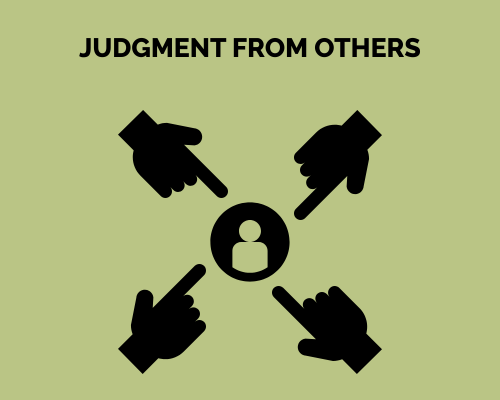
1) Judgment from others
2) Anticipated or Perceived Judgment from others
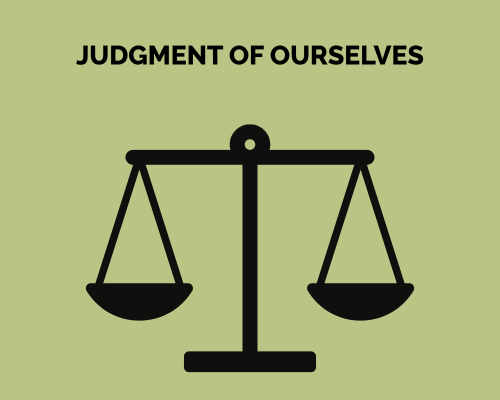
3) Judgment of ourselves
Inspiration for this blog article came from the practice bunker.
I was in the bunker practicing my sand shots alongside another woman who was working on her bunker shots, too. She had a camera set up behind her to capture her swing, clearly focusing on improving her game. As we both went about our business, a man walked by on his way to the range and stopped and offered his unsolicited advice, telling her, “You need to bend your wrists more”.
She didn’t ask for help, nor did she give any indication that she wanted feedback. Still, he stood there and kept at it, offering more unsolicited tips as she hit balls out of the bunker. He ignored her silence and body language until she finally had to acknowledge him with a polite "thanks" to get him to move on and distance herself from him. As soon as he walked away, she came over to me to vent about how presumptuous and intrusive that interaction was. She was clearly annoyed and rightfully so. This was not only uncalled for, but unwanted and, unfortunately, a far too common experience for women golfers.
While I'd like to believe his intentions were good, what made him assume she wanted, needed, or valued his opinion? Why was he judging the result of her shots? Why did that matter to him? And why on earth would he feel compelled to offer up advice to a stranger?
Another example of judgment being cast came earlier this summer from an acquaintance. I got a very late start to my golf season this year. I signed up for a tournament that I knew I wasn't ready for, but it was local and on a course I knew very well. I needed to get a tournament rep in to see just exactly where my game was, so I could then plan out what I needed to focus on.
While I was warming up on the range on the morning of the second day, the husband of a player I know and met once before came up to me and said with a shameful tone, "What happened? I saw your score. You can do better than that". Then, after my second round, a volunteer who was working the tournament walked up to me and he said, "I see you improved from yesterday". The only thing being judged here by these two people with their comments was my scores, the outcome.
Judging players by their scores and every golf shot, for that matter, is something that anyone who plays golf regularly has become accustomed to.
You hit a good shot, you hear: “Great shot!”
You hit a bad one: [silence] or the dreaded moan
Leave a putt short? “Too soft”, "Hit it, Sally!"
Miss the green? “Not enough club.”
Miss a short putt? Gasps.
I’ve been playing golf for 15 years, and it’s rare to get through a round without hearing commentary on nearly every shot. This likely stems from watching golf on TV, where commentators analyze every moment.
But while well-meaning, this constant feedback from playing partners can affect us more deeply than we realize.
Even when it is well-intentioned, it builds an internal dialogue of evaluation and judgment, all focused on the result.
Another example of judgment comes from comments I have received when playing in USGA events. For anyone who has never experienced being a player in these events, it is truly a demanding experience. It takes a lot to earn your way into a national championship and to endure the process of the championship itself. The field is comprised of elite players, so of course, the USGA makes the course setup very challenging. It is not a regular local golf tournament.
In my first US Senior Women's Open, I shot in the low to mid 80's both days, missing the cut. This was met with some pretty harsh judgment from back home. At that time, I had only been playing golf for 11 years! My intentions in playing in it were to do my best and to enjoy being a part of something so big. I was grateful to be there, participating in it. I was caught flat-footed when I received criticism from those who have never competed at this level because my scores were higher than normal. This included a litany of comments ranging from how sad and disappointed they were in my performance to a list of things I should have done better (in a professional major tournament!).
Whatever the reason, this dynamic of being judged by others regardless of the intentions behind it leads to the next concept.
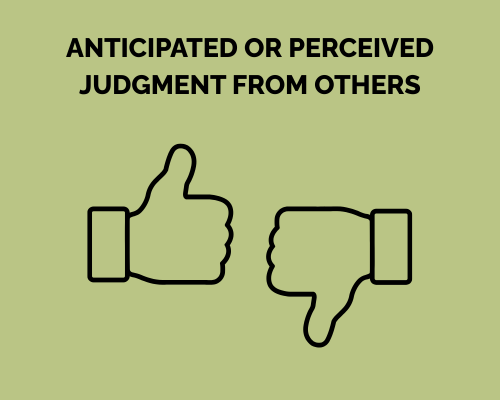
Let's dive a little deeper into this issue because it's an overlay of another problem that I think trips most of us amateurs up and can derail our progress without us even realizing it. These comments, whether well-intentioned or just teasing from your playing partners, can have an impact.
So why does this matter? Over 18 holes, these small moments can snowball.
Now there is also the anticipation of a comment, good or bad, that is getting woven into your experience, whether consciously or subconsciously. It's great to hear "great shot", but what is the silence or bemoaning doing to you on a subconscious level after a bad shot? This can create a level of anticipation for what they will say next or not say with their silence? This can shape how we internalize our performance. It can increase the tension we carry in our body, affecting our swing without us even really realizing it.
Worse, this can train us to focus only on the results, not the process required to get the desired outcome. Before you know it, you are either judging yourself or being judged or feeling as though you are being judged....only to see how it relates to the outcome of the shot. That's energy wasted on the wrong things, and it affects your game improvement.
Back to the woman in the bunker. She was analyzing her swing on video, doing the work. She didn’t need a stranger’s commentary to plant seeds of doubt or create anxiety about how her swing looked to others. That interaction wasn’t just annoying, it could have disrupted her entire learning process. And don't think comments like that from strangers can't have the effect of making you think twice about those around you when you are practicing. Again, wasted energy.
Let’s be honest, haven’t you ever hit a bad shot on the range and immediately looked around to see if anyone saw it? If you are judging that it was a bad shot, looking around to see if anyone else saw it, well, that is perceived judgment at work. It’s subtle, but it shapes behavior.
That experience from my first US Senior Women's Open laid the groundwork for future anticipated judgment for my subsequent USGA events. Every time I compete in one of these big events, I have to deal with the anticipation of these judgmental comments because I get them every time. That just sits there cooking on the back burner, you know it's there and it's coming to a boil eventually. More wasted energy.
This pattern creates a destructive cycle. It can lead you down a path where you begin to fear perceived external judgment more than trusting your development process.
The last concept to examine is how you are judging yourself.
The woman practicing in the bunker told me she just wanted some peace while working on her tempo with her bunker shots. The external judgment she received from him and now the anticipated judgment from virtually anyone walking by has given her pause. What was most important was that she focused her energy on what her intentions were when practicing and whether or not she executed those intentions, in this case, her tempo. That man who offered advice had no clue what she was working on. All of the other stuff that occurred during that interchange added an unnecessary layer and required extra energy to block out the added noise.
Back to that early tournament I played in this summer. My intentions for playing in that tournament had nothing to do with the outcome. I walked away from that tournament quite proud of the fact that I parred every single par 3 all three days (12 total!). That was a win. I was proud of myself for getting out there and playing under pressure without my best stuff. This tournament served its purpose for me at the time. That's a win and something to celebrate. This is where growth happens.
The only goal I have for myself when playing in these USGA events is that I do my best and forget the rest. I try to prepare the best I can, and I choose my goals and intentions for each round. I only judge myself on how well I was able to execute my intentions during the round. I don't attach my self-worth to my scores. And, I don't let any comments from anyone who hasn't walked through the fire of competing in a USGA event get to me anymore. I have learned to let go of any judgy comments and chalk it up to a lack of understanding of how tough it is inside the ropes. The course setup is designed to be more challenging and not to mention how much more difficult it is to perform under the increased pressure in these championships. I think when people see me shooting scores higher than what they are accustomed to seeing me shoot, this can get viewed or judged as a form of failure. I've never judged any of my rounds in the 11 USGA events I've competed in so far as a failure. There are always great things to extrapolate from these rounds, regardless of my scores. The score never tells the whole story.

FINAL THOUGHTS
Improvement in golf means doing things differently. That means failing, adjusting, learning, and slowly getting better. It doesn’t come from obsessing over results. It comes from a commitment to the process. And your process is whatever you need to do to get the desired outcome you are after. Improvement comes from commiting to the changes and giving yourself room to fail until it clicks. This takes time, mental space, and emotional discipline.
When you are working on something and practicing, I think it's a good idea to establish your intention before hitting the shot. Determine what you are specifically trying to accomplish. You have to shut out the temptation of judging the result, too. Using the woman in the bunker as an example, she was in the bunker, trying to swing with good tempo. After hitting the ball with that intention, she should immediately assess whether or not she made the swing with good tempo. That is all she should be judging, not the result of the shot. It takes practice to hone in on this skill because we are so conditioned to be outcome/result-oriented.
So what about when you want to take your new swing work to the course and test it out? Most likely, you will not be lucky enough to get out there on the course by yourself, you will be paired. This is where it is hard to keep to your new swing technique when it's not producing the outcome you want when playing with others. It is very, very easy to jump back to your old, more familiar ways out of fear of looking like a fool or running up your score, especially when you are getting comments from others about the result of your shots.
When others make comments right after your shot, I call these players, with all due respect to the great professional and golf commentator, the Johnny Millers. These are the players who offer up instant critiques as if they were working the booth for a PGA TOUR Tournament.
Why does this matter? These on-the-spot play-by-play Johnny Miller comments unfortunately rob you of the precious few seconds of the time immediately after a shot to reflect on how well you held yourself to your intentions with your swing, because your attention gets pulled to someone's comments about the RESULT. THIS, I believe, is a major barrier to game improvement. You need to practice without judgment of the outcome while learning something new. You need to find the time to get out on the course to have the freedom to experiment, nurture and test your new swing feels.
So, how do you protect your process from outside judgment? You can't. But you can create a bubble to insulate yourself from all of the extraneous noise. Inside your bubble, you aim to focus on your process and your intentions and whether or not you executed them. I believe these 3 things are the most important to focus on:
1) Focus your attention on what you are intending to do with your swing/shot before the shot.
2) Train yourself to immediately assess whether or not you executed your intentions after the shot (not the result).
3) Then decide how that affected the result and use this information to help you plan better next time.
Celebrate that you executed your intention, even if the result may not be great. Don't let the external judgment of others sway you from what you are working on. Oh, and go out and play on your own as much as possible to cultivate a positive learning experience. This quiet time will help you develop your internal dialogue to use immediately after your shot to assess if you executed your intention. This will override others' comments and not affect you! The more you practice the immediate assessment of the execution of your intention with the shot, the easier it gets.
Granted, you can't control who you play with all the time, and learning how to deal with different people is all a part of getting to be a better player. I frankly find it exhausting to hear all that noise about every shot on every hole and waste my valuable energy blocking it out or having to override it, but that's just me. I can't help but think how much better these players would be if their energy and focus were more directed on their shots and not on everyone else's.
So, unless you enjoy having a Johnny Miller in the group replaying and verbally pointing out what you just saw with your own eyes, then when possible, try to surround yourself with like-minded players who are focused on improving their process, too. I would gravitate towards those who ask you about how well you stayed with your process or what you learned from the round versus those who just want to know what score you shot. Applaud the exceptional shots of others, but mostly, focus on your own game and what you are doing.
Judgment matters. Be mindful that you are judging the things that will serve your game in a positive way.
Playing good golf is a matter of executing your intentions throughout 18 holes.
If you want to learn more about how to set your intentions and assess your shots, check out my program in the link below.